Back
case study e-commerce

Unifying Puma's fragmented regional sites into one design system

Led the UI team that drove Puma's shift from disconnected regional storefronts to a single headless, design-system-powered experience, as the system's first adopter and a primary contributor.

Client Puma
Role Lead UI Designer
Services Product redesign, Design System
Timeline 2019–2024
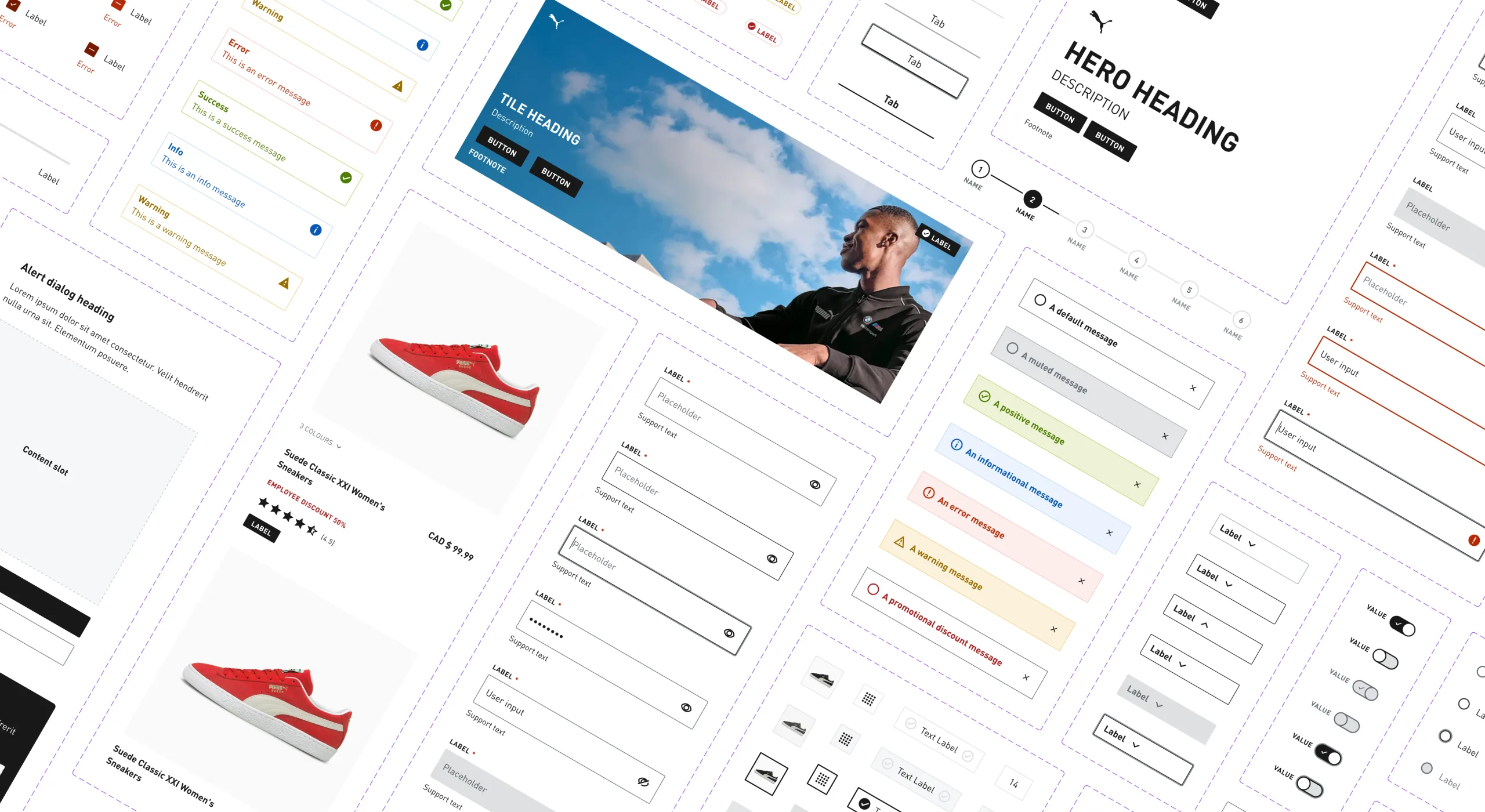
Overview of Puma's Unified Design System work

Context and
the problem

Puma ran separate storefronts across many regional markets: US, Europe, India, and Japan, each owned by a different regional team and built on a patchwork of platforms (Magento, Salesforce Commerce Cloud). There was no unified design system and no single source of truth.

The result: the same brand felt different in every market, components were rebuilt region by region, and shipping anything consistent across markets was slow and costly. For a brand whose identity is a core asset, that fragmentation directly undermined both experience and efficiency.

My role

Led a 3-person UI team working alongside Puma's product and UX managers. Over 4.5 years my role evolved from incremental UI improvements to leading the UI design of Puma's headless rebuild and acting as a primary contributor to the Unified Design System. My team was the system's first adopter, stress-tested it in real product work, and fed findings and component gaps back into it.

Process

01

Incremental improvements

We started by upgrading the highest-traffic templates (PLP, PDP, Checkout), improving the experience while learning the product deeply. This built trust with Puma and surfaced just how much inconsistency existed across regions.
02

Headless pilot on Japan (Cybercat)

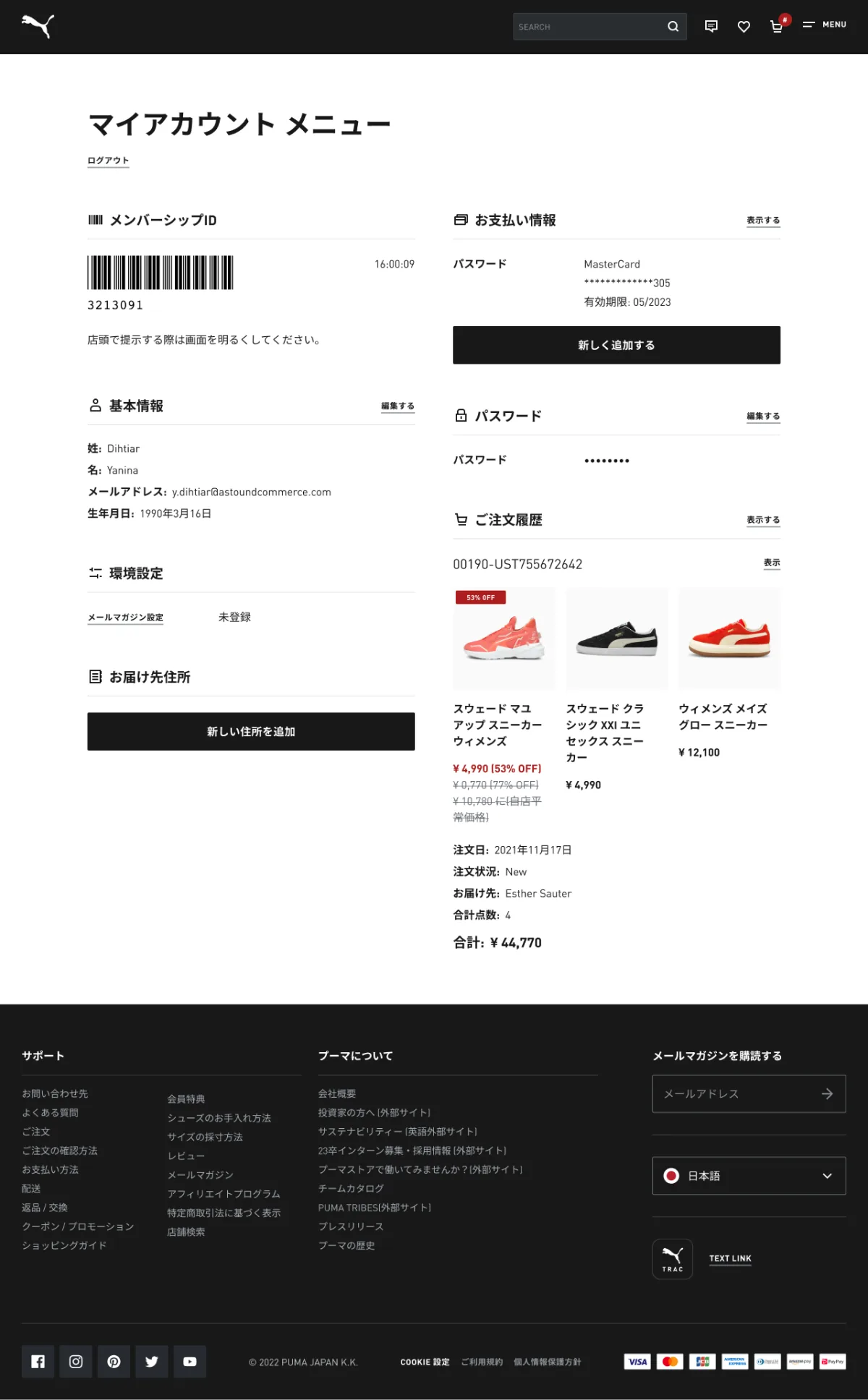
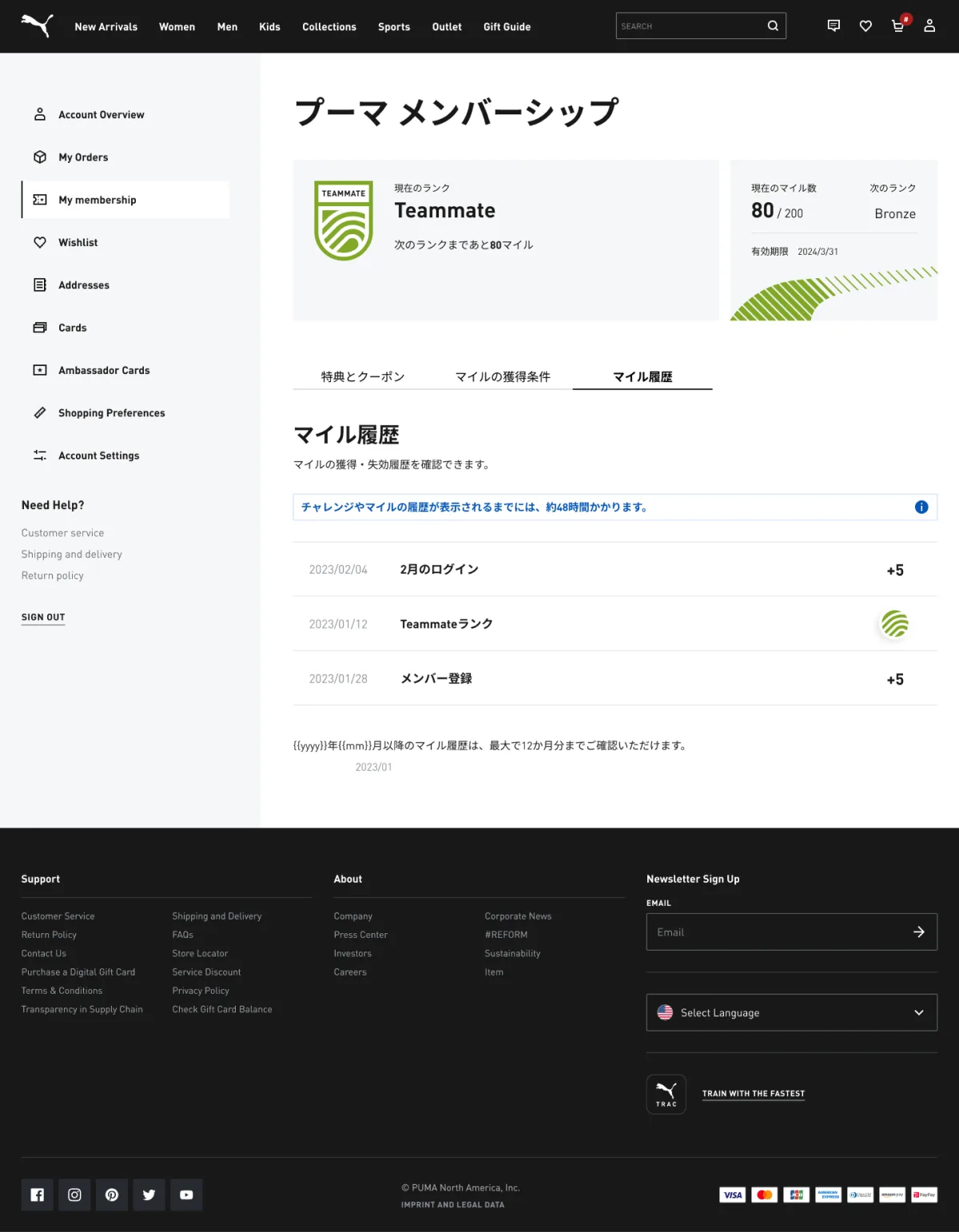
Puma moved to a headless commerce architecture. We led the UI for the Japan storefront as the pilot, designing the full storefront (PLP, PDP, Cart, Checkout, My Account, Search, Global Header/Footer, Wishlist, Locale Selector, transactional emails), with each area moving through the approved pipeline. The Japan designs became the reference and source of truth for rolling the approach out to other regions and seeding the UDS.


03

First adopter and contributor to the UDS

A dedicated design-system team spun up in parallel, and my team became the system's first real users. We ran a tight bilateral loop: consuming UDS components in live design work, testing them, reporting gaps, proposing new components, and co-prioritizing the component roadmap with the UDS team. We maintained "Local Components," patterns built and refined in real product work that then fed into the shared UDS. That adoption-and-contribution loop is what turned a component library into a system people actually used.


04

Scaling across surfaces

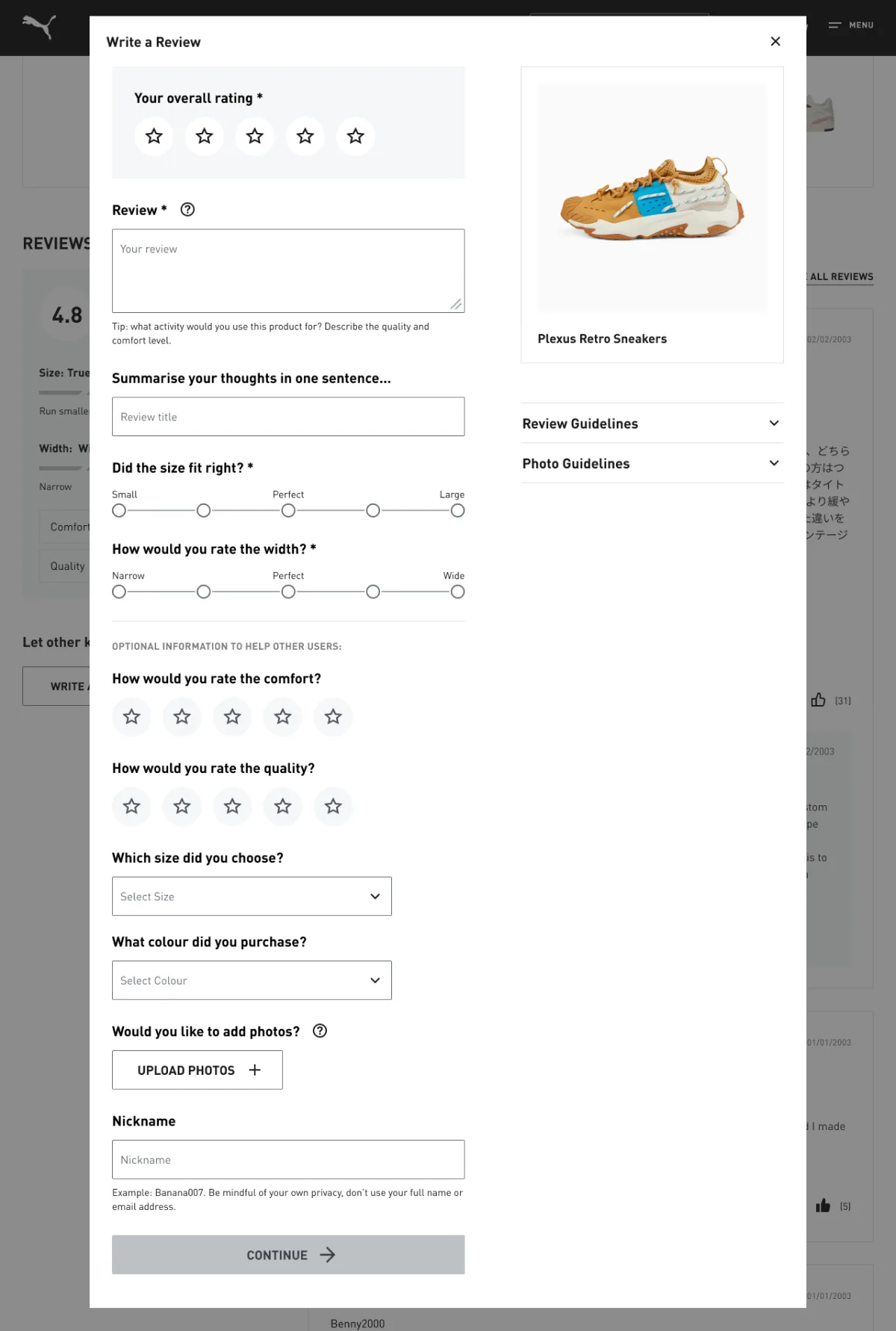
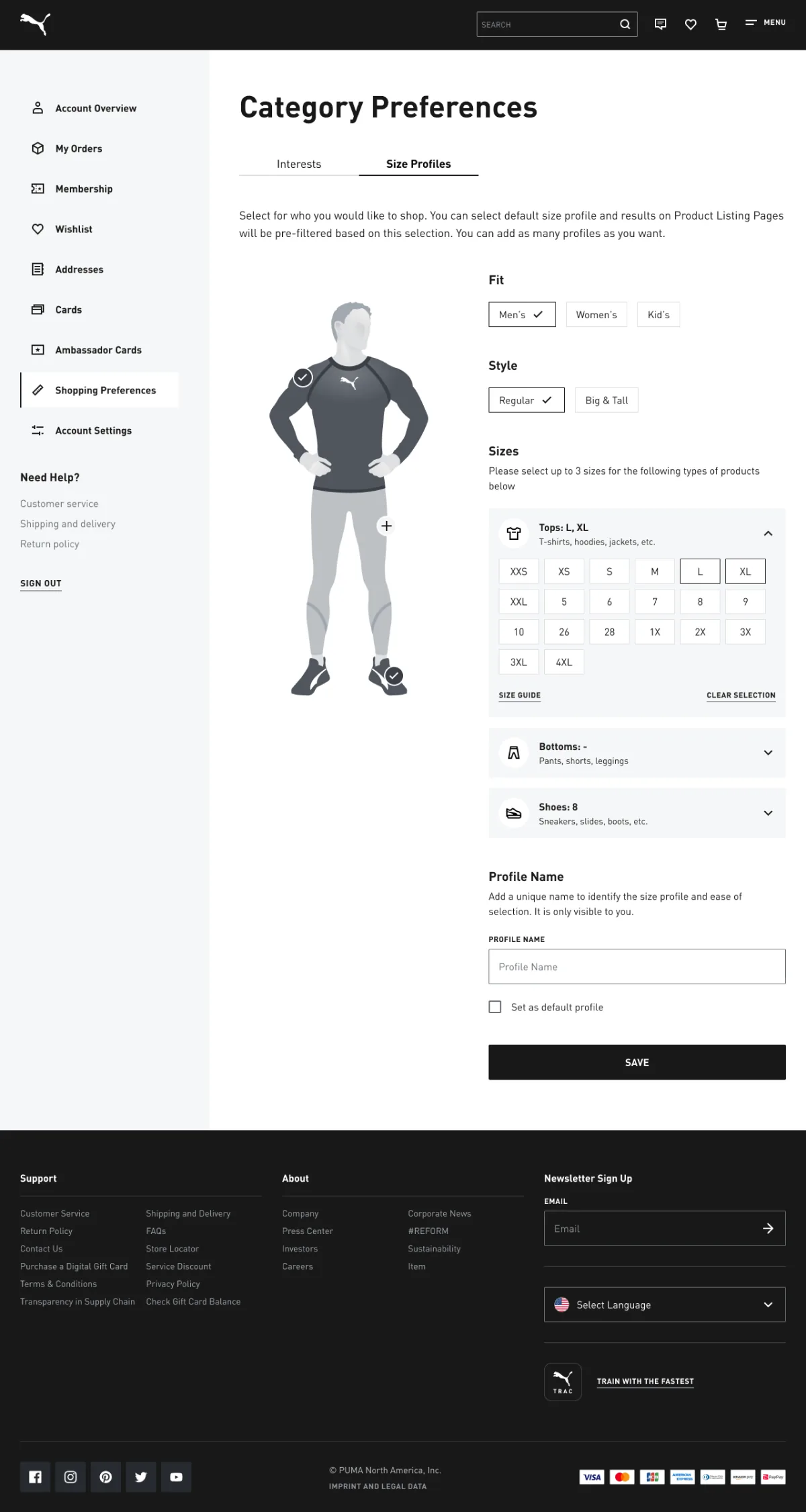
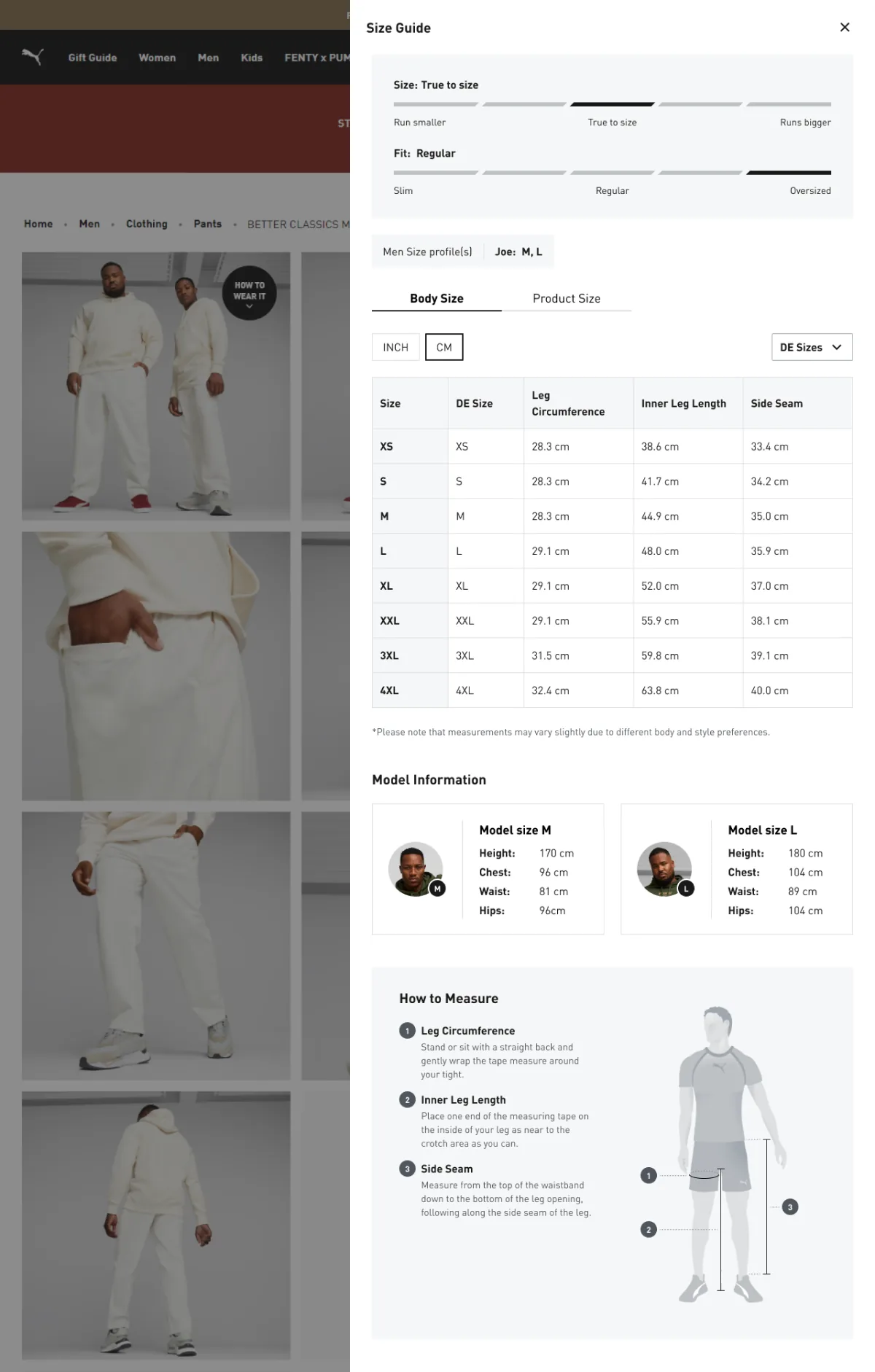
With the system maturing, we designed and componentized the main product surfaces (My Account, Preference Center, Loyalty, Size Guide, Ratings & Reviews, Search), reusing existing UDS components and contributing new ones where gaps existed. We also added craft details like micro-animations, a ribbon animation on My Account, for example. In parallel, we worked on the Puma mobile app: account redesign, Stories, and unified elevated content on the PDP.

What made it work

The thing that worked was the feedback loop: being the system's first adopter meant problems surfaced in real product work, not in the abstract, and got fixed fast. A design system is only as strong as its adoption and contribution model.

Impact

01

Centralised experience

Headless architecture and the UDS moved Puma from four divergent regional sites toward one consistent e-commerce experience.


02

Performance and scale

The Japan headless build improved site performance and became the reference for subsequent regional rollouts.


03

System adoption

As first adopter and primary contributor, my team helped prove and shape the UDS that other regions then built on.

Learnings

Working across a global brand taught me as much about collaboration as about UI. The feedback loop with the UDS team and clear ownership of cross-region consistency shaped the outcome as much as the components themselves. If I were starting it now, I'd define both explicitly from day one.

Contact me

Looking for a design-systems-focused designer?

maliutinamaryna@gmail.com